Back
Data Protection
Why File-Centric Security Is the Missing Layer in Modern Cybersecurity
Modern breaches don’t break defenses-they log in. When credentials are abused, encryption disengages and data decrypts. File-centric security protects data after login, where traditional tools fail.
Written by
Chris Dailey (CRO) & Hari Indukuri (CTO)
Published On
Jan 9, 2026
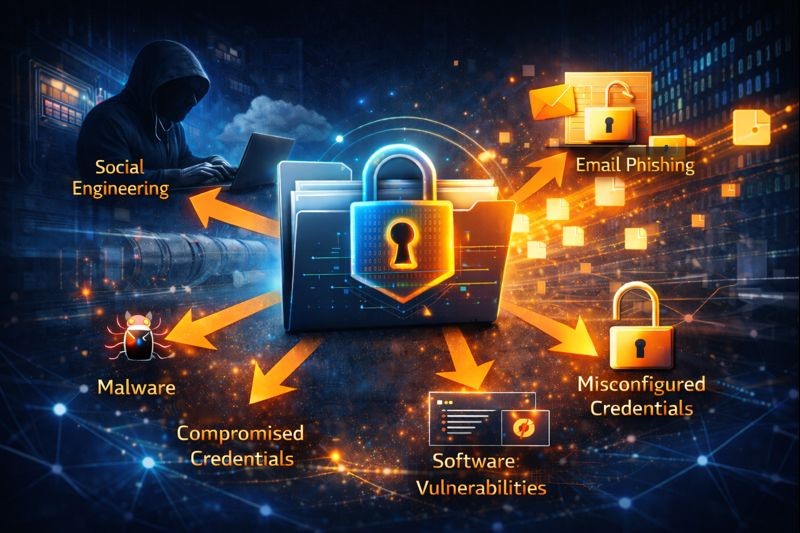

MGM. Snowflake. Twilio. Colonial Pipeline. Uber. Equifax.
Different industries. Different tools. Different years. The same outcome.
In each of these well known security breaches, attackers did not overwhelm defenses. They logged in using valid credentials and stole data that security programs were never designed to protect once access was granted.
For more than a decade, organizations have invested heavily in cybersecurity platforms and frameworks meant to keep data safe. And yet sensitive files continue to walk out the door without triggering alarms until the damage is already done.
The reason is uncomfortable but consistent. Modern security architectures protect environments. They do not protect data after login.
Attackers no longer need to break in. They authenticate. Once they do, encryption disengages, controls defer, and files decrypt automatically. Systems cooperate. Theft becomes routine.
Every major breach listed above exposes the same structural flaw, and we will demonstrate how in this article. The industry has spent years reinforcing the perimeter while leaving the data unprotected at the moment it matters most.
File-centric security exists to close that gap. It was built for the post-login reality where trust has already been abused and perimeter defenses are irrelevant. It is the missing layer that determines whether a breach ends with disruption or with irreversible data loss.
Until leadership demands protection at the file level, organizations will keep funding security programs that perform perfectly right up to the point where the data is taken.
1. Why Traditional DLP Fails in Real Breaches
DLP was designed to detect and block suspicious data movement. It was never designed to stop an authenticated user from opening a file.
That limitation has been exposed repeatedly. Let’s take a trip down memory lane.
MGM Resorts Breach (2023)
The MGM breach was not sophisticated in the way most executives imagine cyberattacks. There was no zero day exploit. No malware payload detonating inside the network. No firewall failure.
Attackers called the help desk.
Using basic social engineering, they convinced an IT support employee to reset credentials. That single interaction handed them valid access into a complex enterprise environment that had invested heavily in modern security tooling.
Once logged in, everything worked exactly as designed.
The attackers moved laterally, accessed systems, and disrupted operations across hotels and casinos. Slot machines stopped working. Reservation systems went offline. The business impact was immediate and public.
Why traditional controls failed: DLP did not trigger because the activity was authenticated. Identity controls did not block access because credentials were valid. Disk encryption did nothing because files decrypted normally for logged-in users.
From the attacker’s perspective, there was no resistance at the data layer.
How File-Centric Security would have changed the outcome: Even with access to systems, sensitive files would have remained encrypted unless opened by approved identities on approved devices under trusted conditions. Operational disruption may still have occurred. Data theft would have been far harder to monetize.
The lesson is simple. Social engineering plus login is enough to defeat perimeter-centric security.
Snowflake Customer Breaches (2024)
The Snowflake incidents exposed a dangerous assumption many organizations make about cloud platforms. That legitimate access equals safe access.
Attackers obtained valid credentials to multiple customer Snowflake environments. In some cases, MFA was disabled or misconfigured. In others, credentials were reused. None of that mattered once authentication succeeded.
The attackers used native tools and legitimate queries to extract massive volumes of sensitive data. From logs and audit trails, the activity looked normal. Because it was.
Why traditional controls failed: DLP has limited visibility inside SaaS platforms when users authenticate legitimately. Security teams saw access events, not attacks. Encryption at rest protected storage. It did not protect data once queried and exported.
The platforms worked as designed. The security model did too.
How File-Centric Security would have changed the outcome: Files and datasets would remain encrypted outside approved contexts. Even if data was exported, it would be unreadable without the right identity, device, and key. Theft would still occur. Value extraction would not.
Cloud scale makes this problem worse, not better. Legitimate access at scale becomes legitimate theft at scale.
Twilio and Cloudflare (2022)
In both incidents, attackers bypassed sophisticated defenses by targeting people instead of systems.
Employees were phished for credentials and MFA approvals. Once attackers logged in, they accessed internal tools and systems with elevated trust. No malware was required. No exploit chains were necessary.
The attackers operated inside authenticated sessions.
Why traditional controls failed: Zero Trust authenticated the users successfully. Endpoint security saw nothing malicious. DLP did not intervene because files were accessed legitimately. Encryption disengaged once sessions were active.
The attackers were treated as insiders because the system had no reason to treat them otherwise.
How File-Centric Security would have changed the outcome: Files accessed by compromised accounts would remain encrypted unless contextual policies were satisfied. Data exposure would be limited even after successful phishing.
These breaches demonstrate a hard truth. Authentication success is not proof of safety.
2. Why IRM and EDRM Failed in Practice
Information Rights Management and Enterprise Digital Rights Management promised persistent control. In practice, they failed to scale across real workflows.
Sony Pictures Breach (2014)
The Sony breach remains one of the clearest examples of what happens when attackers have time and freedom inside an environment.
Attackers spent weeks moving laterally, collecting emails, scripts, unreleased films, and executive communications. The damage was reputational, financial, and strategic.
Sony had encryption. Sony had security tools. None of them mattered once attackers authenticated inside the network.
Why IRM and encryption failed: Files decrypted automatically for authenticated users. Rights management controls were fragmented and inconsistent across workflows. Once access was achieved, data was readable everywhere it traveled.
Security protected systems. Data was left exposed.
How File-Centric Security would have changed the outcome: Files would remain encrypted unless opened under trusted conditions. Exfiltrated content would be useless. The breach would still be serious. The data loss would not define the event.
The longer attackers stay inside, the more dangerous automatic trust becomes.
3. Why DSPM Alone Cannot Stop Data Theft
DSPM tools help organizations discover where sensitive data lives. They do not protect it.
Toyota Source Code Leak (2022)
This breach did not start inside Toyota. It started with a subcontractor.
Credentials were accidentally exposed in a public repository. Attackers used them to access internal systems and proprietary source code. The data was then leaked publicly.
Why DSPM failed: DSPM tools can identify where sensitive data exists and flag risky configurations. They do not stop authenticated access. They do not encrypt files. They do not prevent downloads.
Visibility without control does not stop theft.
How File-Centric Security would have changed the outcome: Source code files would remain encrypted even after access. Possession would not equal usability. Exposure would not equal compromise.
Supply chains magnify credential risk. Data-centric protection is the only scalable counter.
4. Why Zero Trust Does Not Prevent Data Theft
Zero Trust verifies who can access systems. It does not control what happens after access is granted.
Colonial Pipeline (2021)
Colonial Pipeline was breached using a single compromised password. No MFA. No malware. No advanced techniques.
Attackers logged in and accessed internal systems. The business shut down operations as a precaution, causing widespread fuel shortages and public panic.
Why Zero Trust failed: Authentication succeeded. The system trusted the attacker. Controls did exactly what they were designed to do.
Security validated identity. It did not protect data.
How File-Centric Security would have changed the outcome: Sensitive operational files would decrypt only in approved environments. Even with access, attackers would face barriers to extracting usable data.
Critical infrastructure amplifies the consequences of trust failures.
Uber (2022)
Attackers targeted a contractor connected to Uber. Credentials were phished. MFA approval was tricked. VPN access followed.
Once inside, attackers scanned internal systems, accessed documentation, and explored sensitive resources. Screenshots of internal tools later circulated publicly.
Why Zero Trust failed: Authentication and authorization were valid. The attacker was treated as a legitimate user. No system flagged the behavior early enough to prevent exposure.
How File-Centric Security would have changed the outcome: File access would remain bound to contextual rules. Data accessed outside approved conditions would stay encrypted. Exploration would not translate into leakage.
Insider-like access remains the most dangerous access of all.
5. Why Encryption Alone Is Not Enough
Encryption is everywhere. And it keeps failing for the same reason.
Encryption typically turns off after login.
Equifax (2017)
Equifax remains a defining failure in data protection. Attackers exploited a known vulnerability, gained access, and exfiltrated massive volumes of sensitive personal data.
The organization had encryption. It did not matter.
Why encryption failed: Once authenticated inside sessions, files decrypted normally. Encryption protected storage, not usage. Data was readable and exportable.
How File-Centric Security would have changed the outcome: Persistent encryption would keep files protected regardless of session state. Access would require ongoing validation beyond login.
When data exposure lasts years, leadership accountability lasts longer.
The Pattern Is Clear
Across MGM, Twilio, Snowflake, Colonial Pipeline, Uber, Sony, and Equifax, the same sequence appears:
Attackers used legitimate access. Traditional tools trusted them. Data walked out the door.
This is why breaches continue to succeed. This is why organizations keep losing data. This is why the industry needs a new model.
The Solution: File-Centric Security
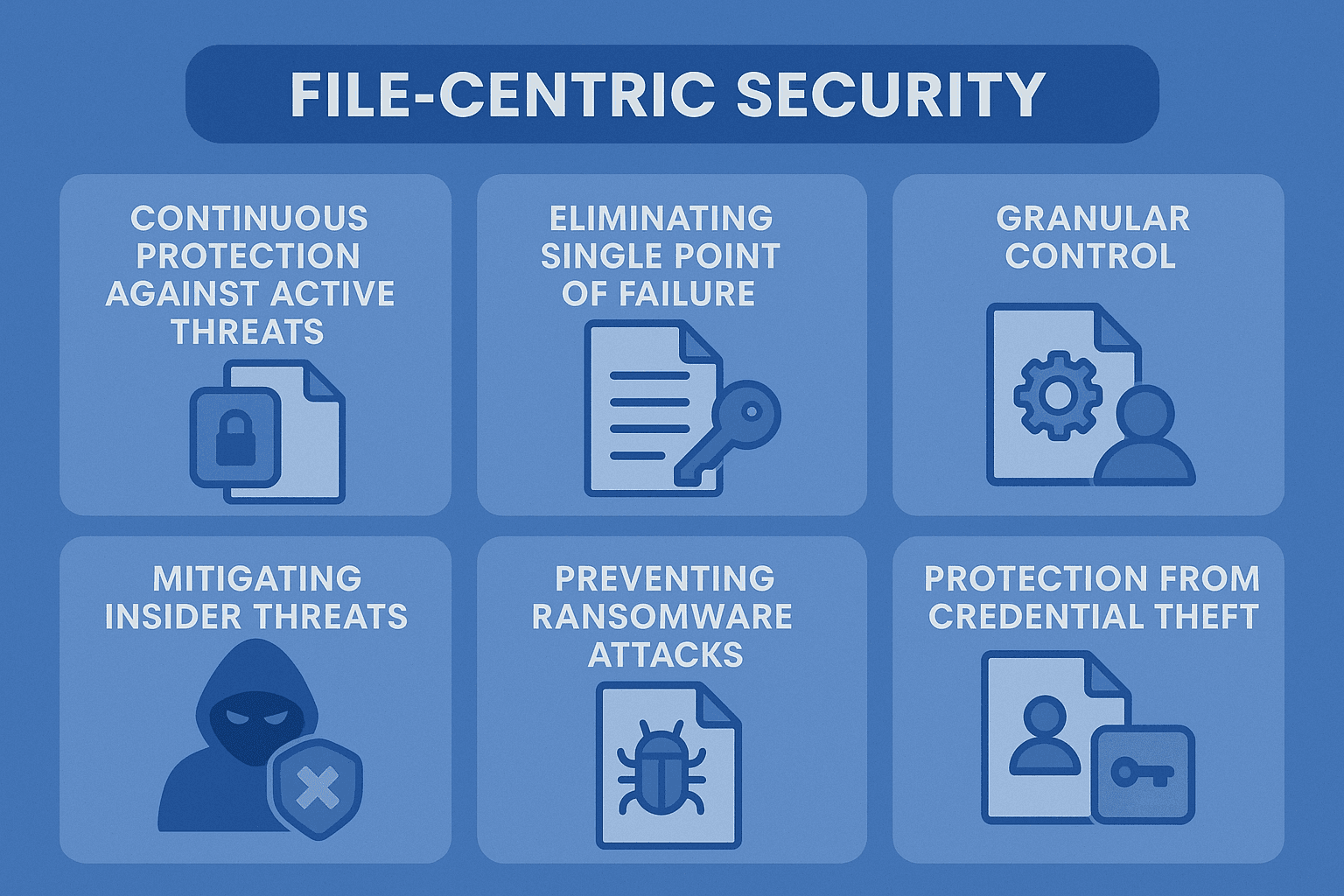
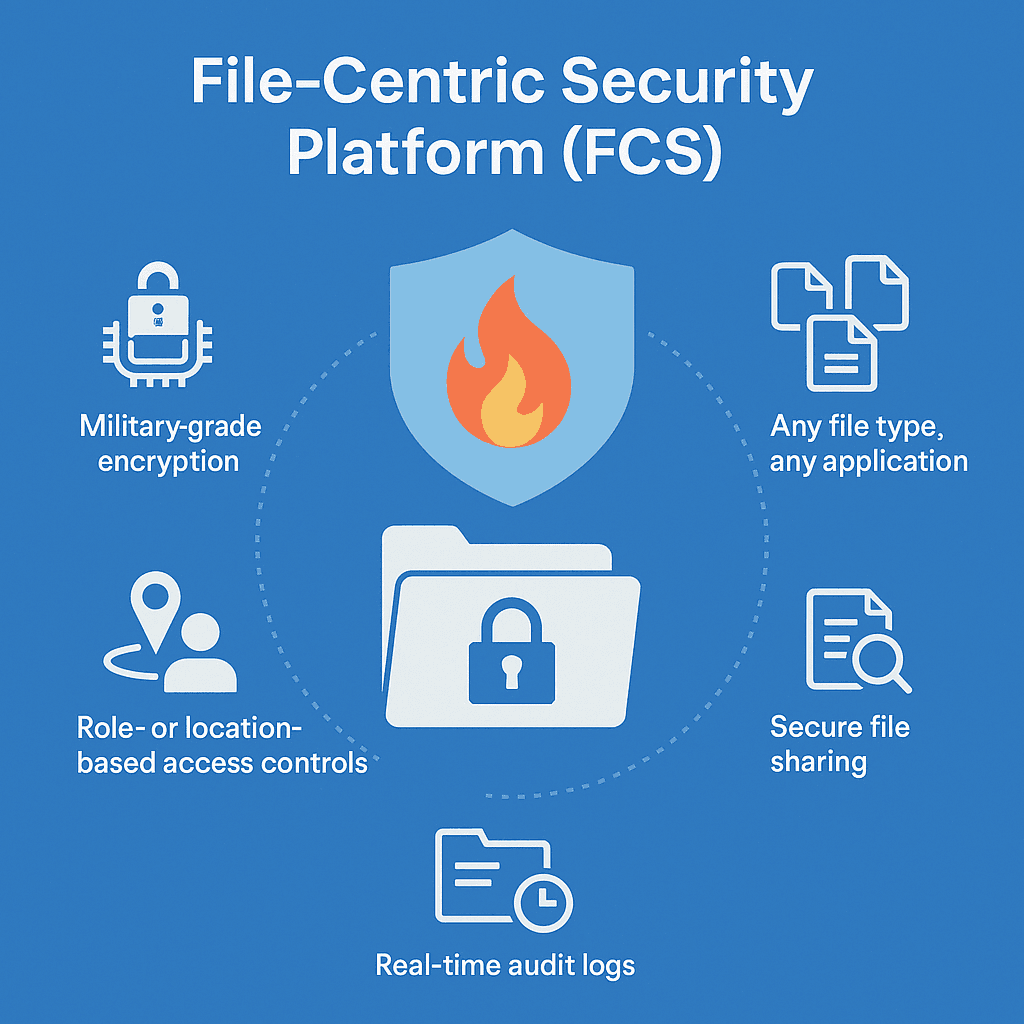
File-Centric Security changes the unit of protection from systems to data.
In this model:
Files remain encrypted everywhere
Policies travel with the data
Access is re-evaluated continuously
Exfiltrated files stay unreadable
Insider misuse becomes visible
Credential compromise becomes survivable
This is the missing layer in modern cybersecurity. The layer that prevents data theft rather than detecting it after the fact.
The Standard Leadership Must Demand
There is one test that matters.
If an attacker logs in using valid credentials, can they read your files?
If the answer is yes, then the organization does not have data security. It has infrastructure security.
File-Centric Security raises the standard. It assumes compromise and denies value. It shifts control back to the organization. It turns breaches into contained events instead of existential failures.
This is not an incremental improvement. It is a structural correction.
And it is long overdue.






solutions

© 2018-2025 FenixPyre Inc, All rights reserved
solutions
7775 Walton Parkway
Suite 224
New Albany, OH 43054
© 2018-2025 FenixPyre Inc, All rights reserved
solutions
7775 Walton Parkway
Suite 224
New Albany, OH 43054
© 2018-2025 FenixPyre Inc, All rights reserved